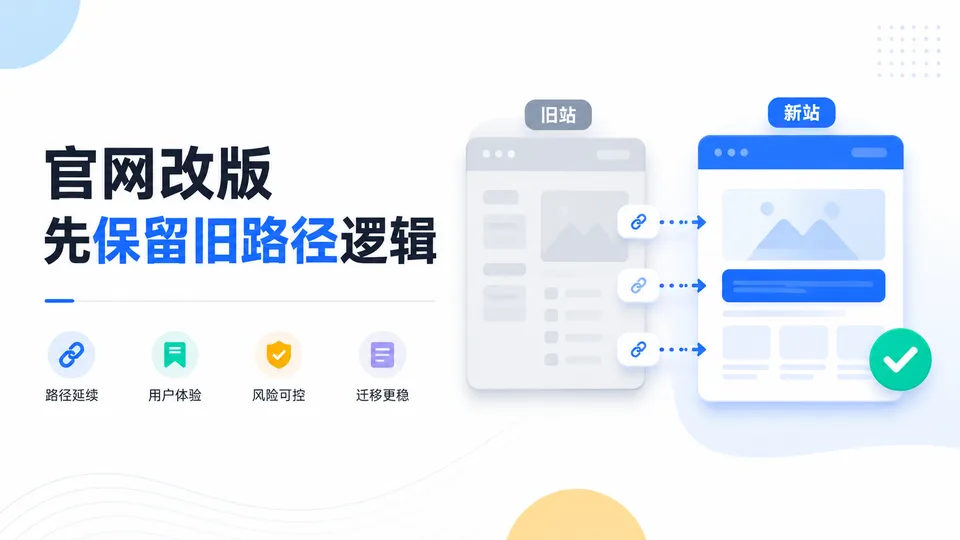
Make it clear that a redesign is not just a new skin
A website redesign is not simply replacing the visual layer. The old site already has content, search visibility, and visitor habits, and all of these need to be considered during the redesign.
A safer approach is to review the existing sections and pages first, then decide which content should be kept, which content should be merged, and which pages need to be rewritten. Important paths also need to be handled carefully during launch to avoid obvious drops in access or search indexing after the redesign.
The biggest risk is often old content handling
Many redesigns fail not because the new pages look bad, but because the old content was not reviewed properly. For example, the old site may have had product pages, case pages, and article pages, but the new site keeps only a few overview sections. As a result, the content entrances that previously supported search traffic and customer browsing suddenly disappear. The interface may look newer, but the overall value of the website can actually decline.
Before redesigning an official website, it is best to run a content inventory. List the pages that must be retained, URLs that already have search value, copy that needs to be rewritten, and low-quality content that can be removed. This keeps the redesign from stopping at the visual layer and allows structure, content, and future maintenance to be improved together.
The redesign goal should be defined first
It is also important to clarify why the redesign is happening. Some companies need a visual refresh, some have a confusing structure, and some have an old site that is simply hard to update. If this goal is not clear, the redesign process can easily turn into adding more and more new effects without solving the old problems. It can even make later maintenance harder.
A valuable redesign usually solves three problems at the same time: the pages become clearer, the content becomes easier to maintain, and customers can find key information more easily. When these three goals are met, the redesign is not just a surface refresh. It turns the official website from an aging asset into a more useful business entry point.
Valuable content assets from the old site also deserve special attention. Many old websites look outdated, but they may contain accumulated product details, case pages, or article URLs already indexed by search engines. If these parts are not carried forward properly, the redesigned site may look more modern while performing worse overall.
For this reason, a website redesign is better understood as reorganization and upgrading, not simply tearing everything down. When valuable old content is retained and supported by a clearer structure and a more stable maintenance model, the new site can improve experience, content value, and future growth at the same time instead of only looking visually newer.