Start with why website costs vary
There is no fixed price for building a corporate website. The main differences usually come from page structure, content organization, visual customization, frontend implementation, launch support, and ongoing maintenance.
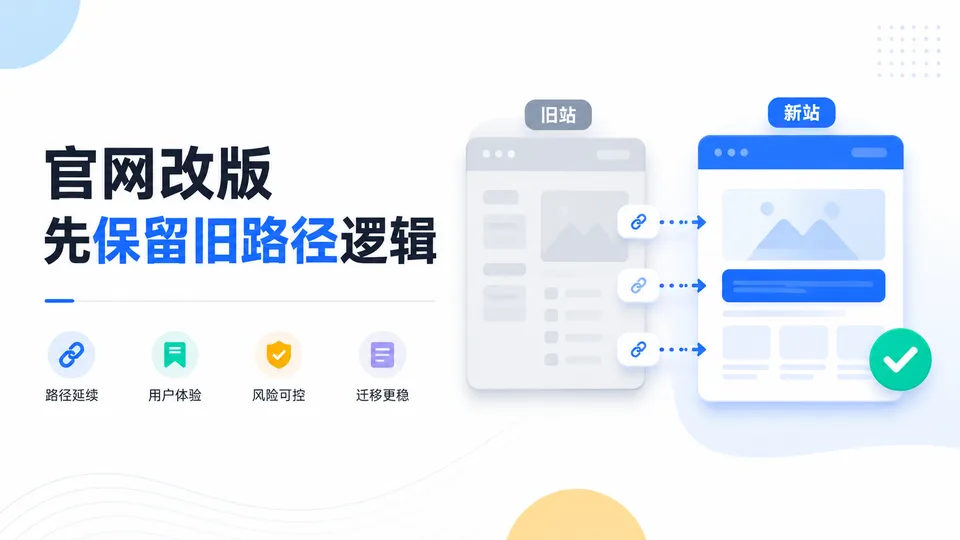
If the company already has an old website, the budget may also be affected by content migration, image cleanup, section restructuring, and historical URL handling. Instead of comparing quotes only by the final number, it is more useful to ask whether the finished website will be easy to maintain and continue updating.
Look at the work that is most often underestimated
Many companies ask only for a total price at the beginning, but the real cost often sits inside the details. Are product materials complete? Do case studies need to be reorganized? Is a multilingual version needed? Should the mobile experience be handled carefully? Will the company continue publishing content after launch? Each of these factors can change the scope of the project.
A safer approach is to ask the provider to explain the page scope, delivery items, revision rounds, launch support, and follow-up maintenance method clearly. A quote that looks cheap at first can easily become more expensive later if content entry, page additions, or functional adjustments are not defined in advance.
From the company’s perspective, the budget is best understood in two layers. The first is the cost of “getting the website built.” The second is the cost of “making the website usable for a long time.” The first may cover design and development only. The second often includes content organization, case supplementation, basic SEO setup, mobile detail optimization, and maintenance support. These are the parts that determine whether the website is genuinely useful.
When comparing proposals, break the total cost apart instead of focusing on a single number. If the delivery scope is clear, the maintenance logic is stable, and the site can continue to receive content after launch, a slightly higher budget may be more cost-effective than a one-time low-cost solution. It is also more suitable as a long-term online asset.
Judge the budget based on long-term use
The budget also depends on the goal of the site. If the company only needs a basic display page, the cost can be controlled. If the official website needs to support case updates, article publishing, regional pages, and multilingual content over time, the structure and delivery depth need to be stronger. The difference in budget is essentially about how the website will be used in the future, not only how many pages it has at launch.
When judging cost, the key is not to find the lowest price, but to confirm whether the investment can produce a stable result. If the website remains easy to maintain after launch, content can continue to grow, and future changes do not require repeated rebuilds, then this type of budget is usually more worthwhile and more aligned with long-term business operations.