Launch does not mean the project is over
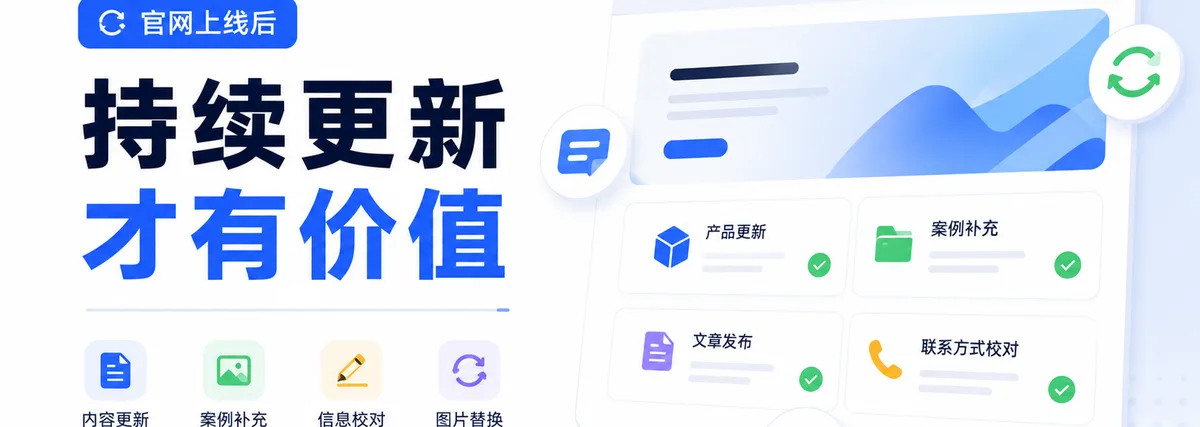
Many companies think the website project ends once the site goes live. In reality, valuable websites are usually shaped by continuous post-launch updates. Product information, case additions, article publishing, contact checks, and image replacements all influence how visitors judge the site.
From a long-term perspective, website maintenance is not only about fixing bugs. More importantly, it keeps the content aligned with the company's current business, so visitors see information they can actually use whenever they open the site.
Content freshness is the easiest thing to ignore
After launch, the most easily overlooked issue is whether the content is still current. A company may add new products, complete new projects, or change contact details while the website still shows old information. Visitors who see outdated content may naturally question whether the company is still active.
Even without a major redesign, core pages should be checked regularly. If case studies, FAQ content, and news updates can be added over time, the website will look more active and gradually build more useful search entry points. Continuous updating is not just about keeping the website alive; it allows the site to grow with the business instead of staying frozen on launch day.
Post-launch updates should follow a clear rhythm
From a maintenance-priority perspective, the homepage's core message, contact information, product or service pages, and case-study sections deserve attention first. If these fall behind the actual business, the impact is usually much larger than a single unpublished article. When the core pages stay accurate, the credibility of the whole website becomes more stable.
If possible, companies should establish a simple maintenance rhythm, such as checking key pages monthly and adding cases or articles quarterly. This prevents the website from slowly stagnating because no one is specifically responsible for it, and it helps turn the site into a long-term channel for public presentation and search traffic.
Maintenance also includes ongoing improvements to small experience details: whether images are outdated, buttons still link correctly, forms can be submitted, and pages load reliably. These issues may look minor, but if a visitor encounters an error or delay on an important page, it can directly affect their perception of the company's professionalism.
The better approach is not to wait until the website is completely outdated and then rebuild it all at once. Small updates, corrections, and additions over time keep the website fresh and prevent years of accumulated problems from appearing at once. In many cases, this also lowers the overall operating cost.