
2026.6.17
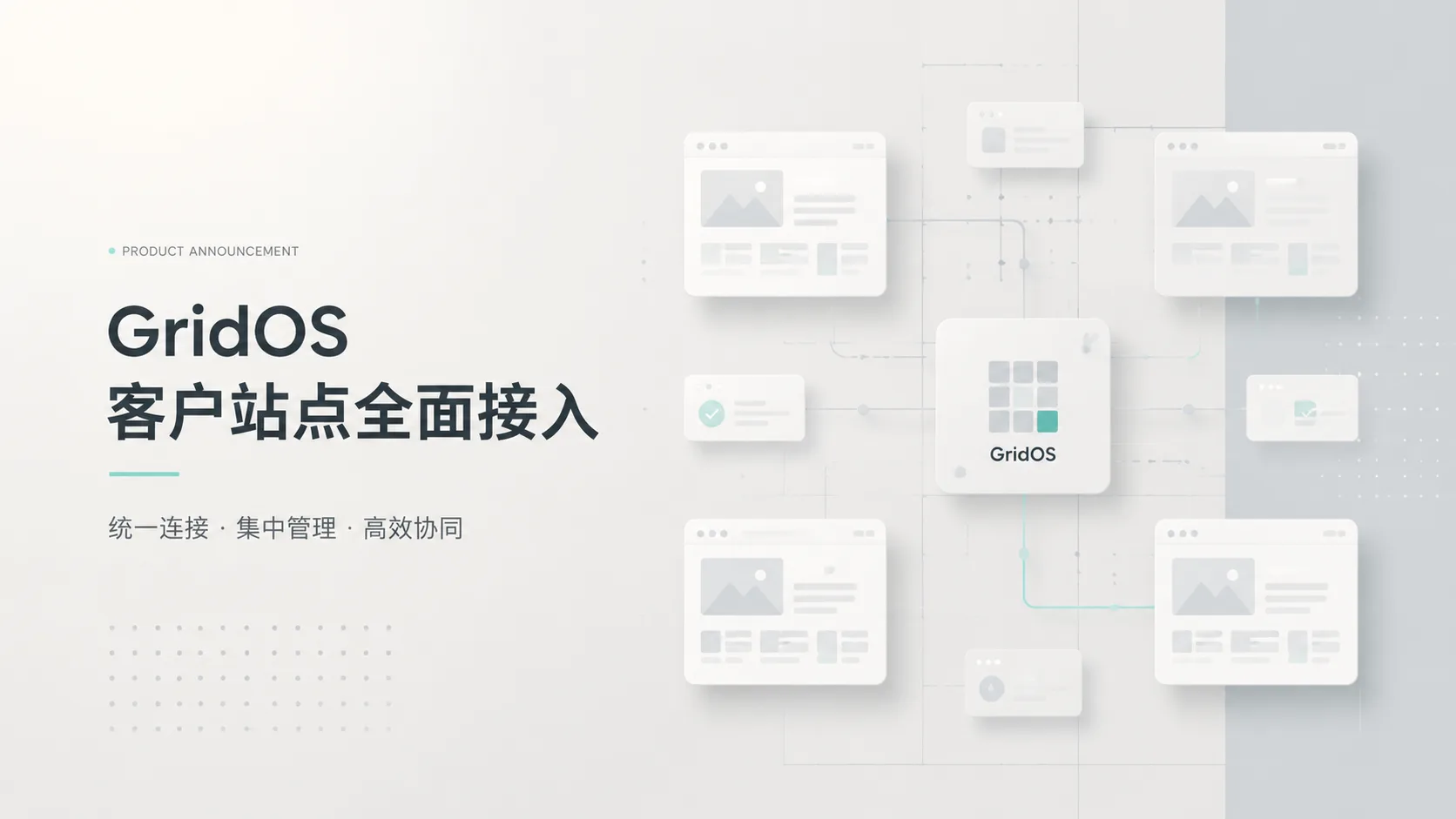
Grid has completed a phased integration of existing customer sites
Customer sites that were already under operation and maintenance before January 1, 2026 have now been fully connected to GridOS. This means these sites are no longer only "available online"; they have entered a more unified content, configuration, and maintenance system.
The purpose of this integration is not simply to replace frontend styles. The more important work is to bring scattered content structures, configuration methods, and maintenance rules back into the same system foundation. For sites already connected to GridOS, later updates, content organization, and continuous optimization now have a more stable base.
The focus is unified maintainability
During the long-term operation of many corporate websites, the most common problem is not one outdated page. The deeper problem is that section structures, contact information, QR codes, multilingual content, and site configuration are scattered across different places. The longer this continues, the harder the site becomes to maintain.
This stage of GridOS therefore focuses first on common maintenance capabilities: basic site information, contact lists, QR code galleries, language switching, content structure, and the reorganization of legacy content. These changes may not always appear as a dramatic page redesign, but they directly affect update efficiency and site stability.
In practice, this is more like laying a foundation for long-term operation than applying a surface-level refresh. Once the maintenance method is unified, adding content, adjusting structure, expanding language versions, or continuing to build new pages becomes much smoother.
The current stage is system integration first, deeper organization next
From the overall progress, all related customer sites have entered the GridOS system. System-level integration has been completed, while content organization and detail-level frontend optimization will continue to move forward site by site.
Some sites already have a relatively complete structure and configuration. Their next step is mainly content addition and experience refinement. Other sites still retain historical information structures, so they need to be organized gradually without interrupting existing access. We prefer this incremental method because, for operating corporate websites, a smooth transition is usually more important than a large one-time replacement.
This is also the current working logic of GridOS: connect first, unify next, then deepen. The system foundation is stabilized first, and then content and page expression are gradually brought into a clearer state.
For customers, later updates will be clearer and more controllable
After a site is connected to GridOS, the biggest change is not a single visual effect. The real change is that later additions, revisions, and maintenance work become easier to control. Product updates, company profiles, contact information, QR code content, and multilingual pages can gradually return to one clearer data entry and maintenance logic.
This matters especially for long-term operation. Many websites become messy not because they are updated too often, but because each update is handled temporarily in a different place. Over time, nobody can clearly tell where a piece of content comes from or which configuration affects which page. Unified integration helps reduce this uncertainty and supports a more stable update rhythm.
From the outside, customers may not immediately see every page refreshed at once. But from the system perspective, this step is critical. Only after maintenance logic becomes stable can frontend expression continue to improve on a reliable foundation.
GridOS will keep moving from maintainable to easier to use
After completing this integration stage, the next focus will be content improvement, page-level expression, and a more stable multi-site maintenance experience. For different customer sites, we will continue to organize content according to existing material volume, page structure, business context, and future update needs.
For Grid, this is not an ending point. It is a clearer starting point. GridOS is becoming the shared foundation for long-term maintenance and continuous updates across customer sites. We will continue to share progress around content, delivery, and site organization through our Updates section.